
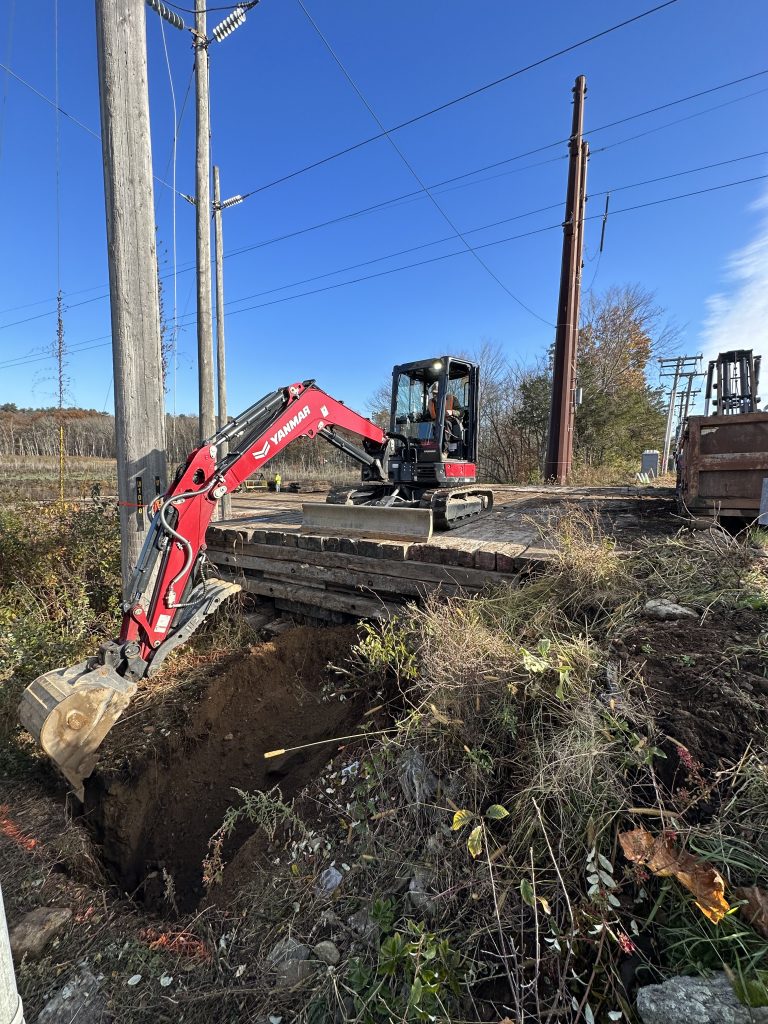
Utility corridors, road right-of-ways, and easements don’t get the same kind of attention a residential lot does — until something goes wrong. A line crew can’t reach a pole because brush has taken over the access road. A downed line during a storm is harder to locate and repair because the corridor hasn’t been kept clear. A sightline along a rural road gets blocked by encroaching growth right as visibility matters most.
Right-of-way maintenance exists to prevent exactly these situations, and it’s a different kind of work than clearing a backyard or a wooded lot. Here’s what actually goes into doing it correctly.
What Makes a Right-of-Way Different From a Typical Clearing Job
On a residential property, the goal of clearing is usually straightforward: open up the land, get rid of what’s overgrown, leave a usable site behind. Right-of-way work has additional constraints layered on top of that.
Access is often tight. Utility corridors and easements are frequently narrow strips of land, sometimes running through terrain that wasn’t designed with equipment access in mind — steep grades, wetland buffers, or dense wooded sections that see infrequent maintenance. Getting the right equipment into a corridor without damaging surrounding property or infrastructure takes planning that a straightforward lot-clearing job doesn’t require.
Infrastructure has to be protected, not just avoided. Clearing vegetation around utility poles, buried lines, transformers, or other infrastructure means working carefully near equipment that can’t be nicked, disturbed, or exposed to falling material. This isn’t a matter of general caution — it requires crews and equipment operators who understand what’s actually at risk in a given corridor.
The work needs to slow regrowth, not just remove what’s there. A one-time clearing pass on a right-of-way solves the immediate problem but does nothing about next year. Right-of-way maintenance is typically approached as an ongoing cycle — clearing in a way that sets back woody growth more effectively, so the corridor stays passable and visible for longer between maintenance visits, rather than reverting to the same overgrown state within a season or two.
Why Municipalities and Utilities Take This Seriously
For utility companies, an overgrown corridor is a direct risk to service reliability. Trees and brush too close to power lines are one of the most common causes of outages during storms, and clearing corridors proactively reduces both the frequency of outages and the difficulty of repairing them when they do happen. Federal and state regulations for utility vegetation management exist for exactly this reason — reliability and public safety depend on corridors being kept clear on a consistent schedule, not addressed reactively after a failure.
For municipalities, road right-of-ways affect driver sightlines, signage visibility, and the accessibility of drainage infrastructure along the roadside. Overgrown vegetation along a rural road isn’t just an appearance issue — it’s a factor in accident risk at intersections and curves where visibility is already limited.
Equipment Built for This Kind of Work
Right-of-way clearing benefits from the same kind of specialized forestry equipment used in dense land clearing — tracked machines with mulching or brush-cutting heads that can process vegetation on-site rather than requiring everything to be cut, piled, and hauled away. In a corridor setting, that efficiency matters even more, since access for hauling equipment is often limited and the area being cleared can run for a long distance rather than being contained to a single lot.
Equipment suited to steep or soft terrain also matters here. Right-of-ways frequently cross terrain that a standard clearing crew wouldn’t encounter on a typical residential job — drainage ditches, wetland edges, and grades that require machinery capable of operating without excessive ground disturbance or rutting.
How Right-of-Way Work Fits Into Broader Property and Land Management
Right-of-way maintenance often overlaps with the same land management principles that apply to a large residential or commercial property that’s been left to grow in — the difference is scale, access constraints, and the presence of infrastructure that has to be worked around. Corridors that receive consistent, scheduled maintenance stay far more manageable over time than those addressed only when a problem forces the issue.
Serving Connecticut and the Northeast
Tidy Services provides right-of-way maintenance for utilities, municipalities, and commercial property owners throughout the Northeast. Our equipment and experience are built specifically for the access, safety, and infrastructure demands this kind of clearing requires — work that’s different in scope and precision from standard land clearing.
If you’re responsible for a corridor, easement, or access road that needs to be assessed, contact Tidy Services today to schedule a walkthrough.