
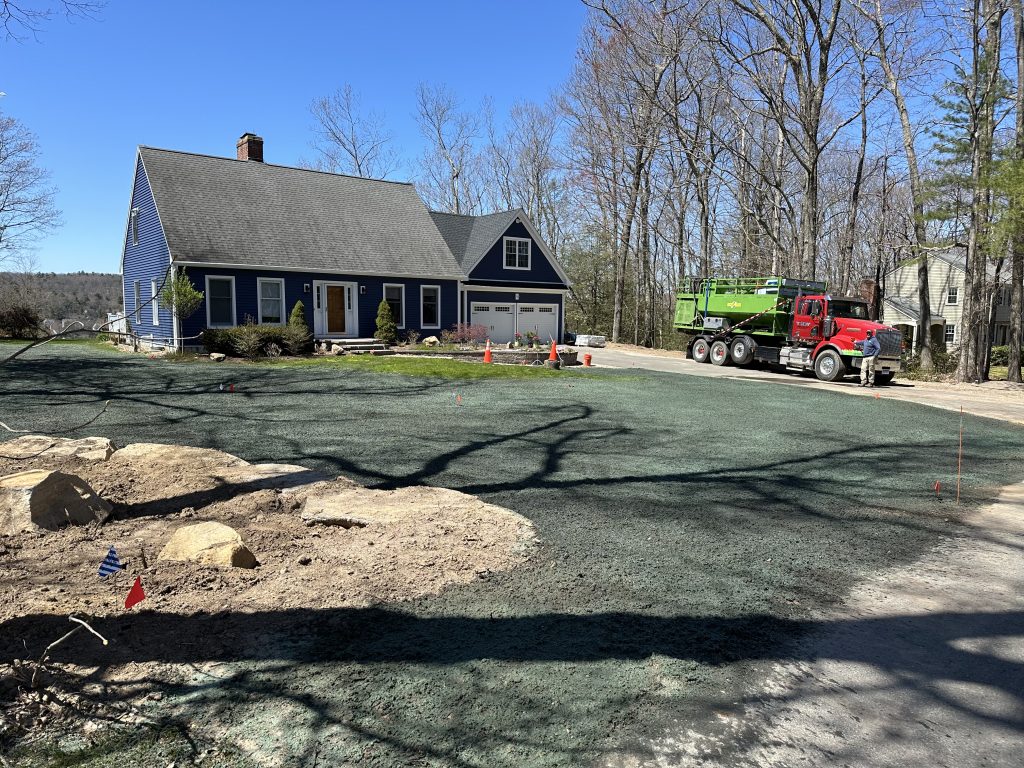
The middle of summer isn’t usually when people start thinking about grass seed. By July, most Connecticut lawns are already showing stress from heat, dry conditions, and heavy use — and many property owners assume they’ve missed the window to establish new growth until fall.
But for many projects, summer is actually one of the most practical times to hydroseed, especially after land clearing, grading, excavation, or utility work has disturbed the soil.
Whether it’s a newly cleared property in Burlington, a roadside slope after drainage work, or a construction site that needs stabilization, hydroseeding gives property owners a faster and more effective way to establish vegetation than traditional seeding methods.
Here’s why it works — and why timing matters more than many people realize.
What Hydroseeding Actually Is
Hydroseeding is a planting process that combines seed, mulch, fertilizer, water, and stabilizing materials into a slurry that’s sprayed directly onto prepared soil.
Unlike traditional dry seeding, hydroseeding surrounds the seed with moisture-retaining mulch that helps protect it during germination. That’s especially important during Connecticut summers, when exposed soil can dry out quickly under direct sun.
The mulch layer also helps reduce erosion and keeps seed from washing away during sudden summer thunderstorms — something traditional broadcast seeding often struggles with on slopes and disturbed ground.
Hydroseeding is commonly used for:
- Newly graded residential lawns
- Construction site stabilization
- Utility and right-of-way restoration
- Erosion control on slopes
- Land clearing recovery
- Commercial property seeding
- Large residential properties and fields
For many larger projects, it’s one of the most efficient ways to establish coverage quickly and evenly.
Summer Creates Challenges for Traditional Seeding
One reason hydroseeding becomes valuable during summer is because standard seeding methods become less reliable once temperatures rise.
Traditional dry seed often struggles because:
- Soil dries out too quickly
- Seed blows away or washes out
- Uneven watering creates patchy growth
- Birds consume exposed seed
- Bare soil erodes during storms
Hydroseeding helps solve several of those problems at once. The mulch blanket retains moisture longer than exposed seed, which helps improve germination consistency during hot weather.
That doesn’t mean hydroseeding eliminates the need for watering — new grass still requires moisture to establish properly — but it creates significantly better conditions for growth during difficult summer conditions.
Why Timing Matters After Land Clearing or Excavation
One of the biggest mistakes property owners make after clearing or excavation work is leaving disturbed soil exposed for too long.
Bare ground creates multiple problems:
- Erosion after heavy rain
- Washed-out slopes
- Mud around access roads and driveways
- Dust during dry weather
- Weed growth taking over exposed soil
Hydroseeding helps stabilize the site before those issues develop.
This is especially important after land clearing and forestry work, where soil has often been disturbed by heavy equipment and root removal. Establishing vegetation quickly helps hold the soil in place while improving the overall appearance of the property.
For commercial projects and utility work, stabilization is often part of the project requirement itself.
Not Every Property Needs the Same Seed Mix
One thing many people don’t realize is that hydroseeding isn’t a one-size-fits-all process.
Different properties require different seed blends depending on:
- Sun exposure
- Soil conditions
- Drainage
- Slope steepness
- Intended use of the property
- Maintenance expectations
A residential lawn mix may be completely different from what’s used on a utility corridor, roadside embankment, or open field.
Selecting the right seed blend matters just as much as the hydroseeding process itself.
Summer Is Often the Best Time to Plan Fall Projects
Even when hydroseeding won’t happen until late summer or early fall, mid-summer is often when site preparation work begins.
Land clearing, grading, drainage improvements, and excavation projects completed during summer help position properties for successful seeding once cooler temperatures arrive.
Planning ahead also helps avoid scheduling delays during the busy fall season, when contractors throughout Connecticut begin preparing sites before winter arrives.
Hydroseeding and Land Services Across Connecticut
Tidy Services provides hydroseeding, land clearing, right-of-way maintenance, forestry services, and site preparation throughout Connecticut, Berkshire County Massachusetts, Dutchess County New York, and surrounding Northeast communities.
From residential properties and commercial sites to utility corridors and large-scale land management projects, our team has the equipment and experience to handle challenging terrain efficiently.
To learn more about our services or request an estimate, visit our contact page.