
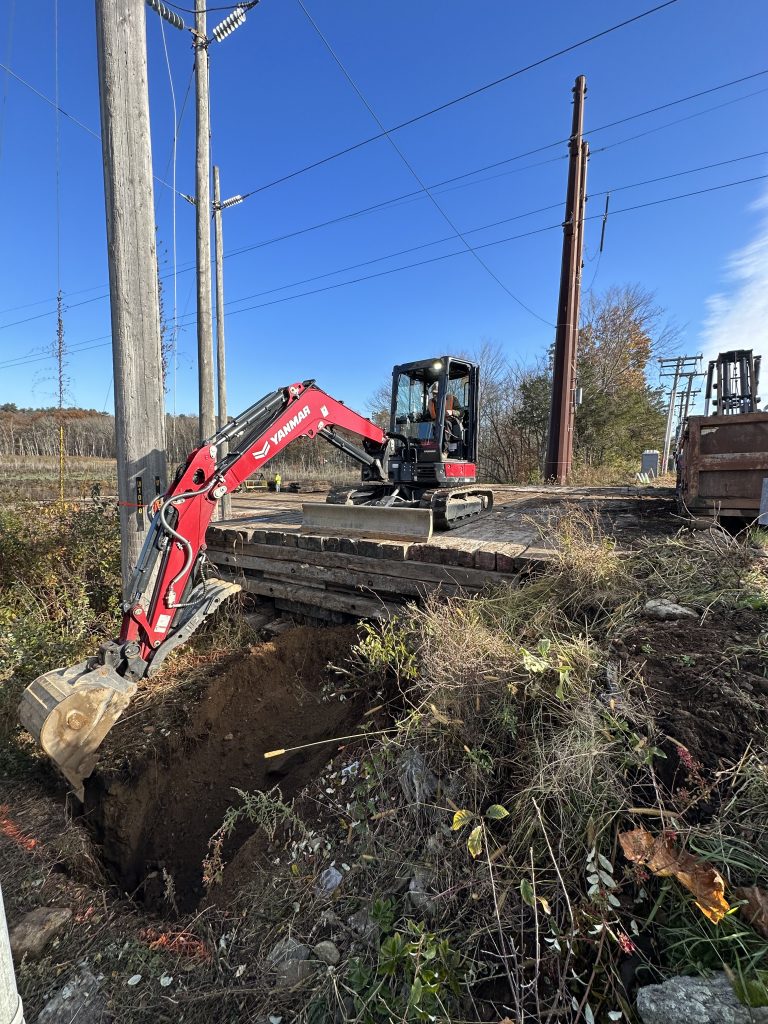
Most people don’t think about land clearing until they’re staring at a problem. Maybe you bought a property with an overgrown back lot you’ve been ignoring for a few years. Maybe a stretch of woods along your driveway has crept close enough to start causing real issues. Maybe you’ve got a field that’s been left to go brushy and you want it functional again. Or maybe you’re preparing a site for construction and the trees and scrub need to go before anything else can happen.
Whatever brought you to this point, the work in front of you is more involved than it might look from the outside — and more manageable than it might look once you understand what the process actually involves.
What “Land Clearing” Actually Means
Land clearing isn’t one thing. It’s a category of work that can mean very different things depending on the site, the goal, and the condition of the land.
At one end, clearing might mean removing a few years of brush and saplings from a field that was once open — a job that’s primarily about mowing and cutting at scale. At the other end, it means felling mature trees, grinding stumps, removing root systems, and hauling everything off the property before grading can begin.
Most residential and commercial clearing projects fall somewhere in between. A wooded lot that needs to be opened up. A brushy field edge that’s encroaching on a lawn. A slope covered in invasive shrubs and scrub trees that’s become a visual and maintenance problem. A driveway corridor that’s grown in tight enough to be a safety concern.
The specific conditions of the land — the density of growth, the size of trees involved, the terrain, and what the land is going to be used for afterward — determine what equipment is appropriate, how long the work takes, and what the site looks like when it’s done.
Why Equipment Matters More Than Most People Realize
This is one of those services where the equipment doing the work makes an enormous difference in the outcome.
Residential-grade equipment — chainsaws, brush cutters, consumer-grade chippers — can handle light clearing, but it hits its limits quickly when the density increases, the trees get larger, or the terrain gets rough. Projects that stretch into days or weeks with inadequate equipment are not just slow; they’re often harder on the land and produce messier results.
Specialized forestry equipment — tracked machines with brush-cutting or mulching heads, purpose-built land clearing attachments, equipment designed for steep or soft terrain — can work through dense growth efficiently, process material on-site without requiring it to be hauled away, and operate in conditions that would stop lighter equipment entirely.
At Tidy Services, we’ve invested specifically in hard-to-find machinery built for this kind of work. That investment isn’t about having impressive-looking equipment on a job site — it’s about being able to complete projects that other companies can’t, faster, and with less disturbance to the surrounding property.
Land Clearing and What Comes After
Clearing is almost never the end of the story. The condition of the land once it’s cleared determines what the next steps need to be — and planning for those steps before clearing begins saves real time and cost.
If the land is going back into active use as a field or lawn, soil disturbance from the clearing process will likely need to be addressed. Root removal and stump grinding leave irregular ground that benefits from grading before any seeding happens. Hydroseeding is one of the most effective ways to establish ground cover quickly on disturbed or newly cleared land — the slurry of seed, fertilizer, and mulch provides good germination conditions on soil that’s been opened up and may not hold moisture well on its own.
If the cleared land is going to be managed as open space or a maintained field, the initial clearing is followed by ongoing land management to prevent the brush and scrub from coming back. In Connecticut and across the Northeast, woody growth comes back aggressively in cleared areas if it isn’t managed. Periodic mowing and cutting keeps what was cleared from becoming a clearing project again in five years.
If the cleared land is a site preparation project for construction, the clearing phase needs to be coordinated with whatever grading and excavation comes next. Getting clearing done cleanly and completely — including stump removal — before the next contractor arrives saves everyone time.
Right-of-Way Clearing: The Commercial and Municipal Side
Not all clearing is on private residential land. Utility corridors, road right-of-ways, and easements require specialized vegetation management to keep infrastructure safe, accessible, and compliant with maintenance requirements.
This type of work has its own set of demands. Access is often tight. The terrain can be challenging. And the work needs to be done with precision — clearing vegetation without damaging infrastructure, managing growth in a way that slows regrowth rather than just removing it temporarily.
Right-of-way maintenance is a core part of what Tidy Services does, with equipment and experience specifically suited to utility and municipal clearing across Connecticut and the Northeast.
When to Schedule Clearing Work
Late spring and early summer are productive times for clearing work for a few reasons. The ground has dried out from spring thaw, which matters a great deal for equipment access on anything but flat, firm terrain. Deciduous trees have leafed out, which makes it easier to assess what you’re working with and identify dead or problem trees. And if the cleared land is going to be seeded this season, getting clearing done now allows enough of the summer growing window to remain for establishment.
Fall is also a good clearing window in the Northeast — ground conditions are typically firm, foliage drop makes the work easier to assess, and clearing done in fall sets up a spring seeding schedule cleanly.
The window to avoid is wet early spring, when soft ground conditions can cause significant rut damage on cleared sites and make equipment access genuinely difficult.
Getting a Realistic Assessment Before You Start
Land clearing projects have a reputation for scope surprises — work that looked like a straightforward day job turns into something much larger once the actual density of growth is assessed. The best way to avoid that is to have someone experienced walk the site with you before any work is scheduled.
Tidy Services has been doing this work since 1992. We know Connecticut and Northeast terrain well, and we know how to give property owners an honest picture of what a clearing project involves before the equipment shows up.
Ready to talk through your property? Contact Tidy Services at (860) 485-4960 or visit tidyct.com to get started. Whether it’s a brushy field edge, a wooded lot, or a large-scale site preparation project, we’ll help you figure out the right approach.